
One small step forward.
What Are Micro-Goals? How Tiny Steps Help You Start When Goals Feel Too Big
A micro-goal is not just a smaller goal. It is the next action small enough that starting feels possible.
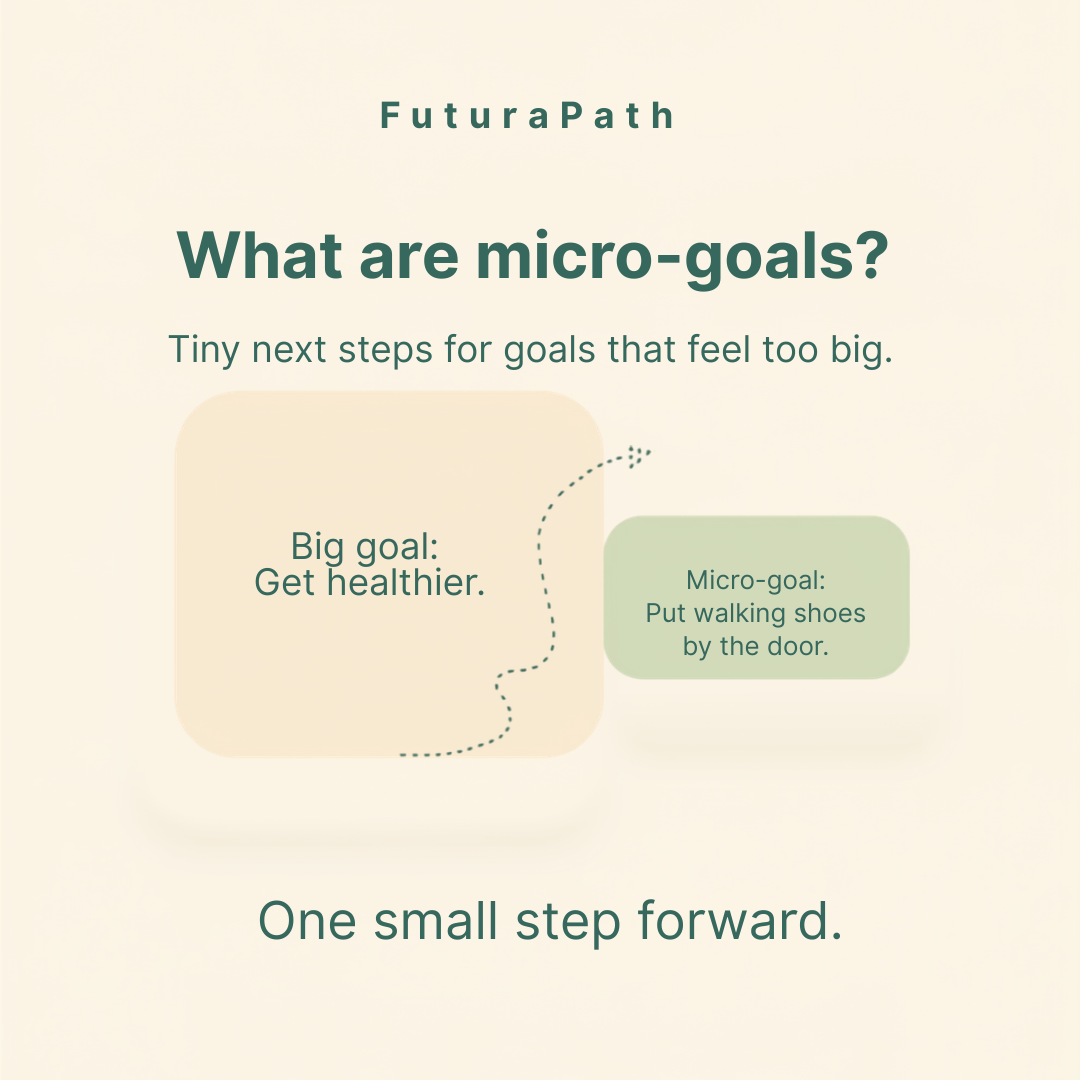
Big goals often fail for a simple reason: the next step feels too vague, too large, or too emotionally heavy to begin.
That does not mean the goal is wrong. It usually means the starting point is still too abstract.
Micro-goals help by shrinking the first move until it feels usable. Instead of asking you to hold an entire plan in your head, they give you one visible action you can begin today.
A micro-goal is the next action small enough that starting feels possible.
That is what makes the idea useful. A micro-goal does not try to solve the whole problem at once.
It lowers pressure, reduces decision load, and helps you move from intention to action without waiting for perfect motivation.
What Are Micro-Goals?
A micro-goal is a tiny, specific action that moves a larger goal forward without requiring a full plan, perfect motivation, or a major time commitment.
It is not just a smaller version of a goal. It is the next action small enough that starting feels possible.
A micro-goal is not defined by a strict time limit. Some micro-goals may take two minutes, while others may take longer. What matters is that the step is clear, small, and believable enough to begin without needing a full plan first.
That difference matters. Many people already know the direction they want to move in. What they lack is a first step that feels clear and emotionally manageable.
A micro-goal should feel small enough that your brain does not immediately push back.
The goal is not to make every action tiny forever. The goal is to make the first step clear enough that progress can begin.
Why Big Goals Feel Hard to Start
Big goals are useful for direction, but they often make a poor starting surface.
A vague goal creates decision load because you still have to figure out what to do first. A large goal creates pressure because the distance between here and done feels too visible. An unclear next step makes starting harder because the brain has nothing concrete to grab onto.
Waiting for motivation can make that gap even wider. The longer a goal stays abstract, the easier it is to delay.
That is part of the pattern behind Why You Know What To Do But Still Can't Start and Why Waiting Until You Feel Ready Keeps You Stuck. Caring about a goal is not always enough to make beginning feel easy.
Big goals often become difficult to enter when they are:
- vague
- emotionally heavy
- too large to picture clearly
- missing a visible first action
- waiting on motivation to make them feel easier
How Micro-Goals Reduce Friction
Micro-goals make starting easier because they are clear, small, specific, and low-pressure.
Instead of asking for a major burst of effort, they lower the amount of energy required to begin. That matters because many people do not need more pressure. They need less resistance.
Micro-goals are also easier to schedule or repeat. A small action is easier to place in a real day than a giant vague intention.
If overwhelm is part of the problem, How To Start When Everything Feels Overwhelming goes deeper on lowering the first layer of pressure.
A good micro-goal is usually:
- clear
- small
- specific
- low-pressure
- easy to start today
The goal is not to impress yourself with the size of the step. The goal is to make beginning more likely.
Micro-Goals vs Tasks vs Habits
These ideas overlap, but they are not identical.
A goal describes direction. A task is something to do. A habit is something repeated. A micro-goal is the next small action that helps you begin.
That means a micro-goal can sometimes look like a task, and it can sometimes become part of a habit. What makes it different is its purpose: reducing friction at the point of entry.
The micro-goal is often the bridge between wanting to move and actually moving.
Examples of Micro-Goals
Here is what this can look like in everyday life.
You can feel the difference immediately. The larger goal still matters, but the micro-goal tells you what to do next.
How FuturaPath Uses Micro-Goals
FuturaPath uses micro-goals as the action layer that connects intention to follow-through.
You can start with a larger goal, break it into smaller pieces if that helps, and then choose one next step that feels small enough to begin. Scheduling stays optional. Reminders stay gentle. Reflection is there to help you restart without shame when life interrupts.
That structure is meant to support real life, not force a perfect system.
This idea connects closely with Why Motivation Is Unreliable — And What Works Instead and Why We Procrastinate and How to Start Anyway. FuturaPath is less about pressure and more about making the next action easier to begin.
Long-term goal -> Smaller goal -> Micro-goal -> Optional scheduling -> Gentle reminders -> Reflection without pressure
You do not need to organize your whole life before progress counts. You need a next step you can actually use.
How to Create Your First Micro-Goal
You can create a micro-goal in a few simple moves.
Try this:
- Choose one goal.
- Ask what the smallest visible action is.
- Make it specific.
- Make it easy enough to start today.
- Add time or reminders only if useful.
- Reflect and adjust after you try it.
If the action still feels heavy, it is probably not small enough yet.
Make it easier, not more impressive.
One Small Step Forward
Micro-goals work because they respect the reality of starting. When a goal feels too big, the answer is often not more pressure. It is a smaller next action.
You do not need to organize your whole life before making progress. Start with one goal and one step small enough to begin.
FAQ
What is a micro-goal?
A micro-goal is a tiny, specific next action that helps you begin when a larger goal feels too big, too vague, or too heavy to start.
Are micro-goals the same as habits?
Not exactly. A habit is something repeated over time. A micro-goal is the next small action that makes beginning easier. It can support a habit, but it is not the same thing.
Why do micro-goals help with follow-through?
Micro-goals reduce friction by making the first action clearer, smaller, and easier to start. That lowers pressure and makes action more likely.
How small should a micro-goal be?
Small enough that starting feels possible today. If the step still feels heavy or vague, shrink it again until it feels usable.
Start Here
Start with one small step.
Bring one goal into FuturaPath, make it smaller, and choose a next action you can actually begin today.