One small step forward.
Why Big Goals Fail — And How Micro-Goals Build Momentum
Big transformations rarely happen through intensity. They happen through small actions repeated consistently.

Most people do not fail because they lack ambition.
They fail because the distance between where they are and where they want to be feels emotionally overwhelming.
A big goal like:
- Get healthy
- Build wealth
- Start a business
- Become more disciplined
can feel inspiring for a moment, and exhausting shortly afterward.
At FuturaPath, we believe sustainable progress begins differently:
One small step forward.
Instead of trying to change your entire life overnight, we focus on connecting long-term direction to tiny, low-friction actions you can actually complete consistently.
That is where micro-goals come in.
What Are Micro-Goals?
Micro-goals are intentionally tiny actions that move you forward without triggering overwhelm.
They are simple, emotionally manageable, realistic, and easy to start.
That may sound too small to matter.
But psychologically, it changes everything.

Why Most Goal Systems Break Down
Traditional productivity systems often push people toward giant task lists, rigid schedules, guilt-driven motivation, and all-or-nothing thinking.
This creates a destructive cycle:
Overplanning -> overwhelm -> avoidance -> guilt -> burnout
For many people, especially those experiencing ADHD, burnout, executive dysfunction, anxiety, or chronic stress, the issue is not laziness.
The issue is friction.
When a task feels emotionally heavy, the brain resists starting.
Micro-goals reduce that resistance.
If you are stuck in the first moment of task paralysis, this companion guide on how to start when everything feels overwhelming can help you lower the pressure before you plan.
The FuturaPath Method
1. Start With Direction, Not Pressure
Begin with a meaningful long-term direction:
- improve physical health
- build financial stability
- launch a side business
- strengthen relationships
- become more organized
The goal is not obsession with the finish line.
The goal is clarity of direction.
2. Break It Into Milestones
Large goals become emotionally safer when divided into smaller stages.
- Run a 10K race
- walk consistently
- jog for 5 minutes
- run continuously for 20 minutes
- complete a 5K
- build toward 10K endurance
This is backward planning: start with the destination and zoom inward until the next step feels achievable.

3. Shrink the Action Until It Feels Easy
Ask:
What is the smallest possible version of this?
The lower the starting friction, the easier it becomes to begin.
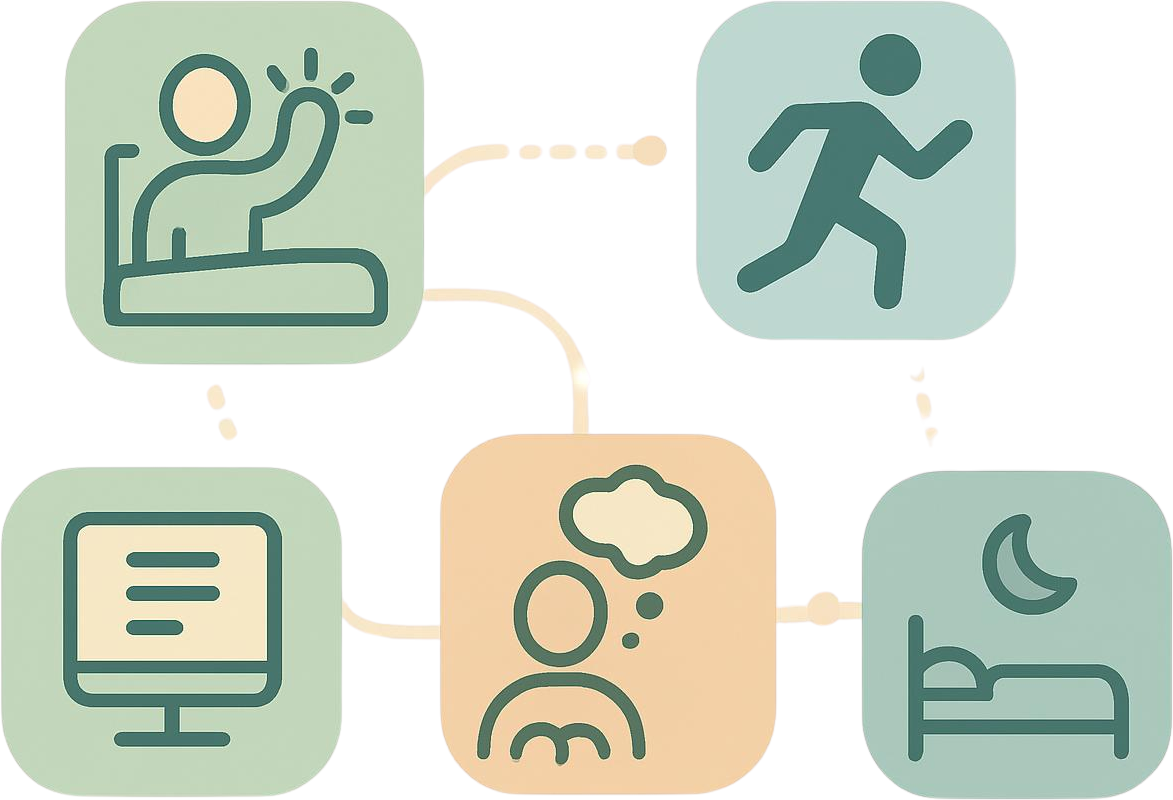
4. Use Existing Habits as Anchors
One of the easiest ways to stay consistent is attaching a micro-goal to something you already do automatically.
This reduces decision fatigue because the trigger already exists.
5. Focus on Momentum, Not Intensity
Sustainable progress usually comes from small repeated actions.
Tiny wins:
- build trust in yourself
- reduce avoidance
- create emotional momentum
- make tomorrow easier

Why Micro-Goals Work Psychologically
Completing small achievable tasks creates positive reinforcement in the brain.
Instead of waiting months to feel successful, micro-goals create daily evidence of progress.
And over time, those tiny actions begin reshaping identity itself.
How FuturaPath Helps
FuturaPath was designed around this philosophy.
The platform helps users create long-term direction, break goals into milestones, define tiny executable actions, reduce emotional friction, build sustainable momentum, and reflect without shame or guilt.
The experience should feel:
- calm
- intentional
- supportive
- emotionally safe
Because productivity should not feel like punishment.
A Better Way Forward
You do not need perfect discipline, extreme motivation, or a total life overhaul.
You only need one manageable next step.
That is how momentum begins.
And over time, those tiny steps build something much bigger than intensity ever could.
Start Here
Start building momentum with FuturaPath.
Create your first micro-goal and begin moving forward, one small step at a time.